
Introduction
Uniform printing plays a critical role in how organizations across the UAE present their identity. In sectors such as hospitality, aviation, healthcare, construction, retail, and corporate services, uniforms function as visual brand representatives. A logo printed poorly can weaken brand perception, while high-quality printing reinforces professionalism and credibility.
The global textile printing industry reflects this rising importance. According to an article Grand view research Group, the textile printing market was valued at USD 25.8 billion in 2024 and is projected to reach USD 56.7 billion by 2033, expanding at a CAGR of 9.3%.
This growth shows how businesses worldwide are investing in advanced printing solutions. In the UAE, where uniforms must endure extreme heat, frequent industrial washing, and high-performance work environments, printing must be engineered for durability as much as aesthetics.
A professional uniform company in UAE must treat printing not as decoration, but as a structural element of brand performance.
The Strategic Importance of Uniform Printing in the UAE
Uniform printing directly influences customer perception. In luxury hospitality environments in Dubai or Abu Dhabi, presentation standards are exceptionally high. Logos must be crisp, aligned, color-accurate, and durable. In construction or logistics sectors, printing must remain visible despite dust, friction, and sun exposure.
Brand consistency across departments and locations strengthens corporate identity. When uniforms look identical across branches, customers perceive organization and reliability. Poorly executed printing, however, leads to uneven fading, peeling, or distorted logos, which can damage brand image over time.
In the UAE’s competitive business landscape, visual clarity is not optional — it is strategic positioning.
Printing Methods Used in UAE Uniform Production
Screen Printing for Large Workforce Applications
Screen printing remains one of the most common printing techniques used for large uniform orders. This method involves pushing ink through a stencil screen onto fabric, creating bold and opaque designs.
It is particularly effective for large teams where cost efficiency matters. When executed with high-quality inks and proper curing, screen printing can withstand heavy wear.
However, in the UAE climate, additional factors must be considered. High UV exposure can degrade low-quality pigments. Therefore, UV-resistant inks are essential for industries such as construction, security, and outdoor services.
Screen printing performs best for simple, bold logos rather than complex gradients.
Embroidery as a Durable Branding Alternative
Embroidery is often selected for uniforms where premium presentation is required. Unlike surface printing, embroidery integrates thread directly into the fabric structure.
This technique is commonly used in:
- Corporate uniforms
- Hospitality front desk attire
- Aviation crew apparel
- Healthcare lab coats
Embroidery provides long-term durability and maintains structural integrity even after repeated high-temperature washing. In the UAE’s heat, thread-based branding tends to hold up better than poorly applied heat transfers.
However, thread density must be carefully controlled to prevent stiffness in lightweight fabrics designed for breathability.
Digital and Heat Transfer Printing
Digital printing allows detailed graphics and color gradients. Heat transfer printing bonds designs to fabric using heat and pressure.
These techniques are suitable for:
- Small-batch custom orders
- Sports team uniforms
- Event-specific apparel
While versatile, these methods require careful material compatibility. In high-temperature environments like the UAE, poor adhesion can result in cracking or peeling after repeated washing cycles.
For organizations requiring custom names or numbering, heat transfer remains a practical option when applied correctly.
Climate and Durability Considerations
UV Resistance and Color Stability
The UAE’s intense sunlight creates a harsh testing environment for printed uniforms. Continuous UV exposure can cause fading or discoloration if inks are not formulated for heat resistance.
Uniform printing must maintain:
- Color consistency
- Sharp edges
- Structural flexibility
- Surface stability
This is particularly important for outdoor sectors where employees spend extended hours under direct sun.
Resistance to Industrial Laundering
In healthcare and hospitality sectors, uniforms undergo frequent washing at high temperatures. Printing must withstand chemical detergents and mechanical agitation without deterioration.
Durable printing methods ensure logos remain intact even after hundreds of wash cycles. Poor printing leads to cracking, peeling, or uneven wear — all of which reduce professional appearance.
A uniform company in UAE must evaluate laundering conditions before selecting a printing method.
Logo Placement and Design Execution
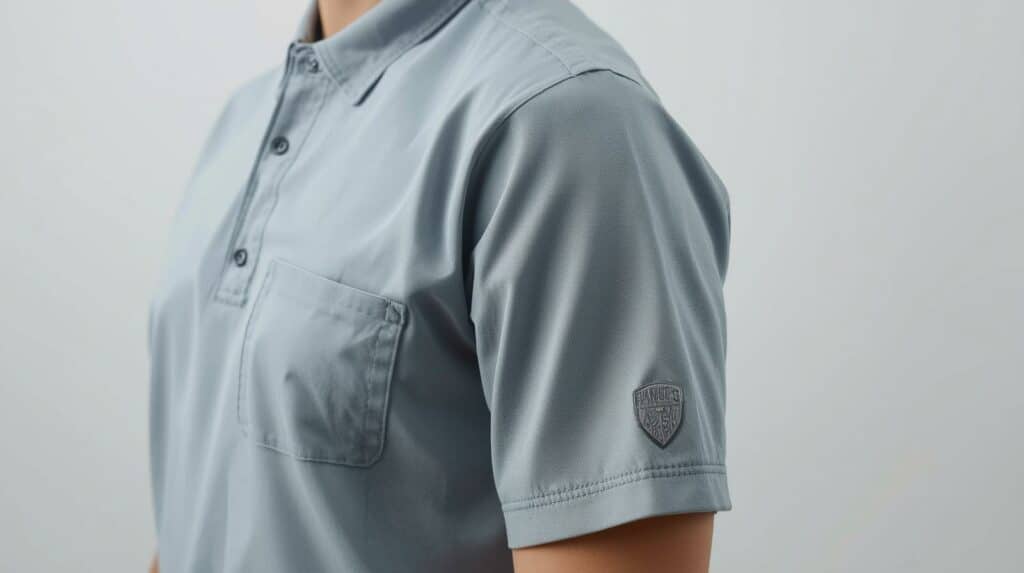
Logo placement influences both visibility and wearer comfort. The most common placement is on the left chest for corporate identity. Industrial sectors often prefer larger back prints for visibility. Sleeve branding offers subtle reinforcement of brand identity.
Placement decisions should consider garment movement and stress areas. Printing across stretch zones may cause cracking over time. Strategic positioning ensures longevity and comfort.
Color psychology also plays a significant role in UAE branding. Navy communicates professionalism, white signals cleanliness, black suggests luxury, and green aligns with sustainability initiatives. Accurate Pantone color matching ensures consistency across production batches.

Cost Efficiency and Long-Term Value
For organizations managing large teams, printing method selection affects long-term budgeting. Screen printing becomes more economical at scale, while embroidery may be more suitable for smaller premium batches.
Selecting durable methods reduces the need for frequent replacements. Over time, investing in high-quality printing lowers operational costs.
Sustainability is also increasingly important in the UAE corporate sector. Long-lasting printing reduces textile waste and supports responsible procurement strategies.
Uniform Printing – Conclusion
Uniform printing in the UAE requires careful balance between brand precision, climate durability, and operational performance. As the global textile printing industry continues to expand beyond USD 25 billion, expectations for high-quality printing standards are rising.
For businesses operating in extreme temperatures and competitive markets, printing must remain sharp, durable, and consistent. A professional uniform company in UAE must approach printing as a long-term structural decision rather than a short-term visual enhancement.
When executed correctly, uniform printing strengthens brand identity, improves employee representation, and ensures long-term value.

